
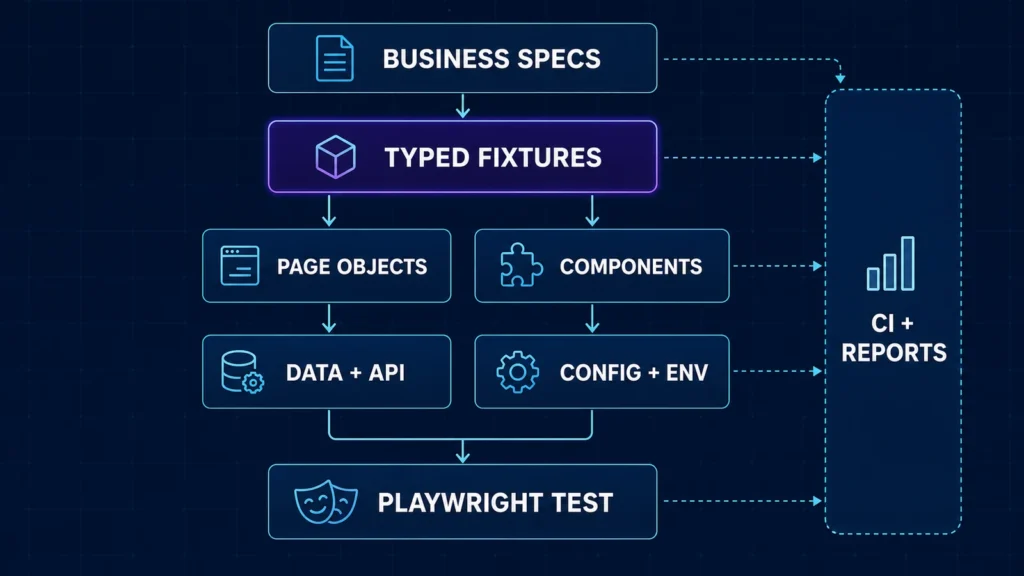
Playwright Automation Framework From Scratch
Design a production-ready Playwright framework with typed configuration, composable fixtures, page objects, components, environments, test data, reporting, and team ownership.

Design a production-ready Playwright framework with typed configuration, composable fixtures, page objects, components, environments, test data, reporting, and team ownership.
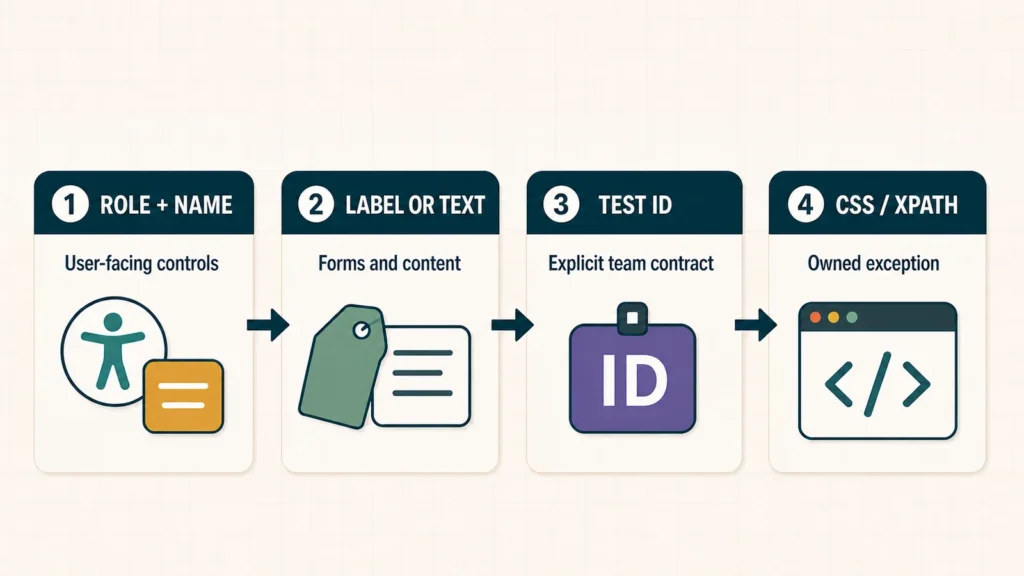
Choose resilient Playwright locators, combine filters and chains, diagnose strictness errors, avoid brittle selectors, and establish maintainable team conventions.
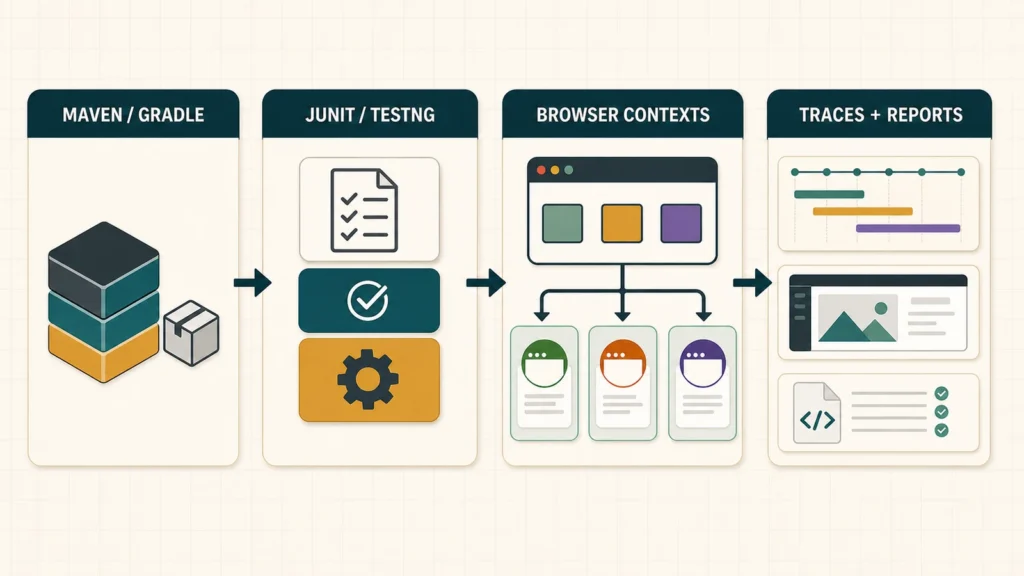
Build a maintainable Playwright Java suite with Maven or Gradle, JUnit or TestNG, isolated browser contexts, enterprise structure, debugging, and CI.
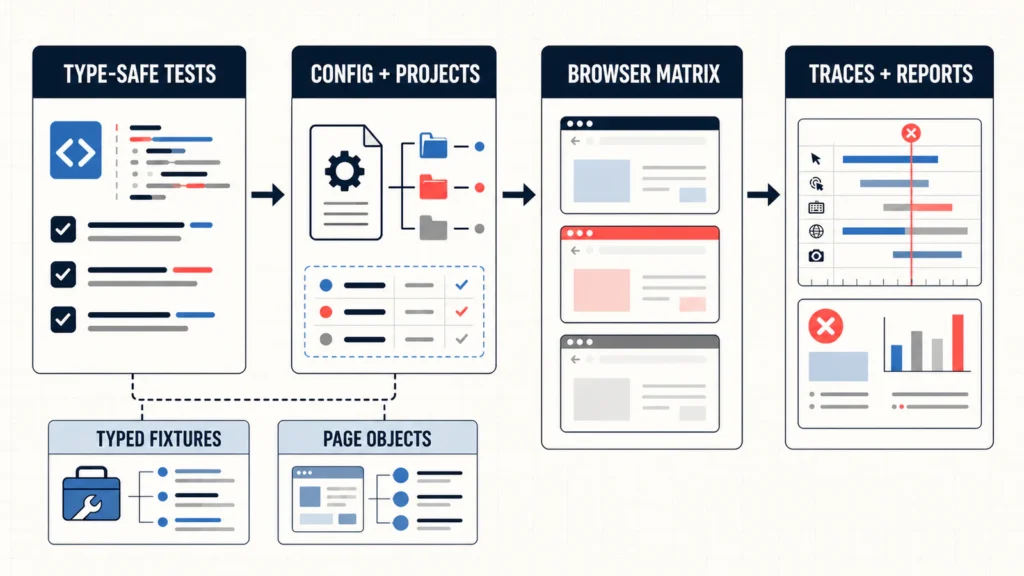
Build a maintainable Playwright TypeScript automation suite with practical configuration, typed fixtures, projects, debugging, CI, and QA-focused design decisions.
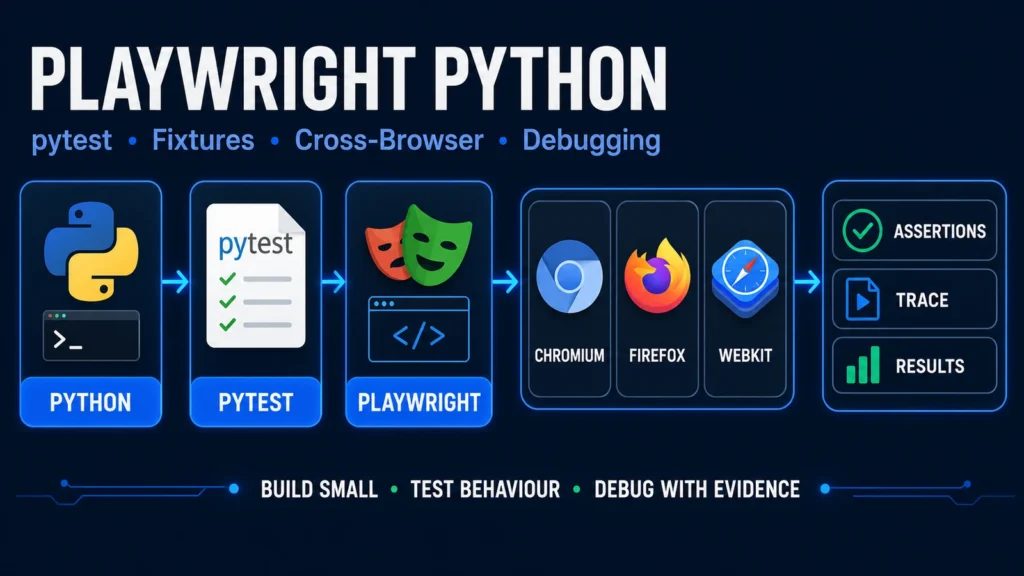
Learn Playwright Python with pytest: setup, fixtures, sync vs async, maintainable suite design, debugging, cross-browser testing, and Selenium migration.
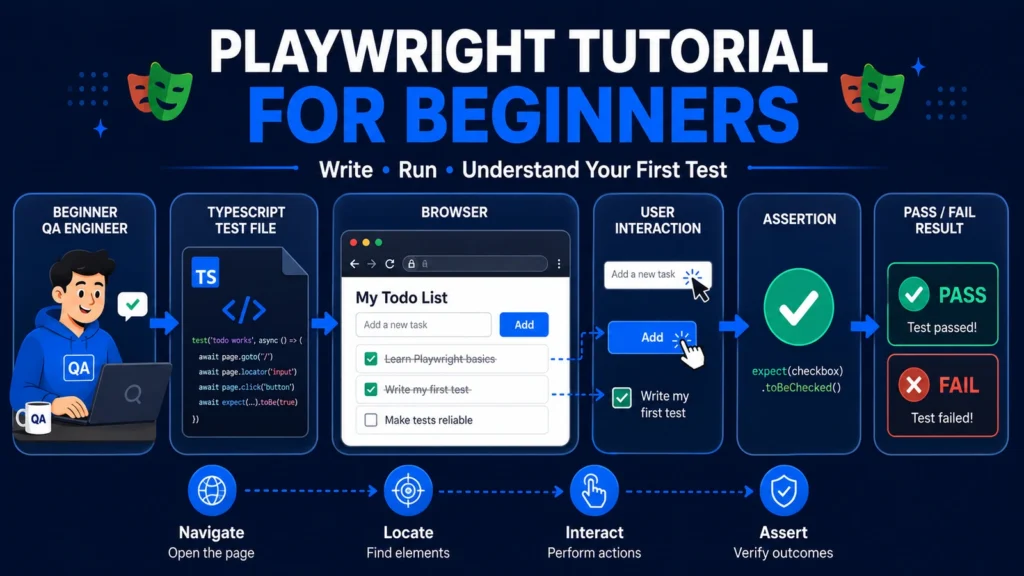
Learn Playwright step by step by writing your first browser test. Understand test structure, navigation, locators, actions, assertions, running tests, and basic debugging.
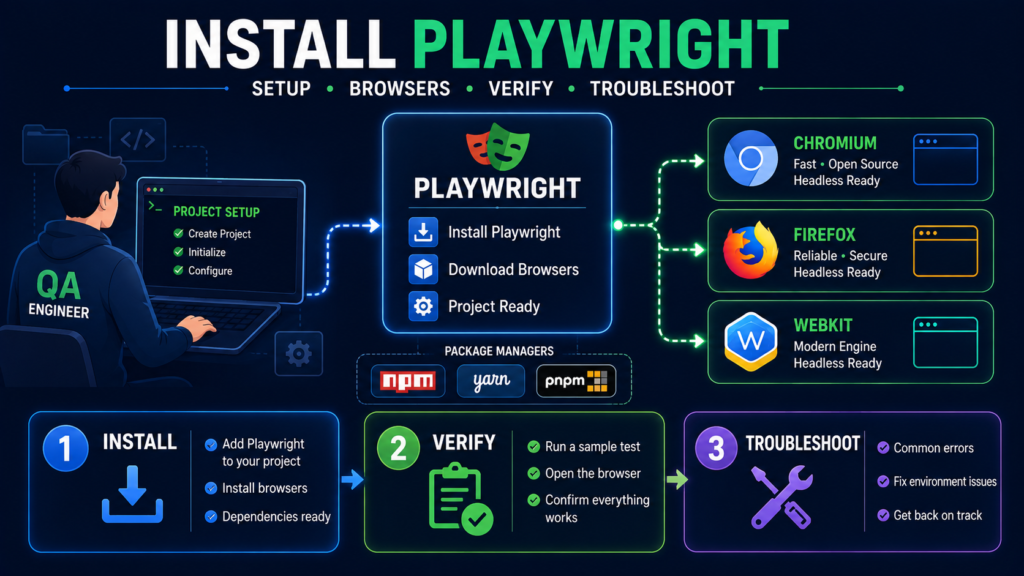
Install Playwright correctly with npm, Yarn or pnpm, set up browser binaries, verify the environment, and fix common Windows, macOS, Linux, proxy and CI setup errors.
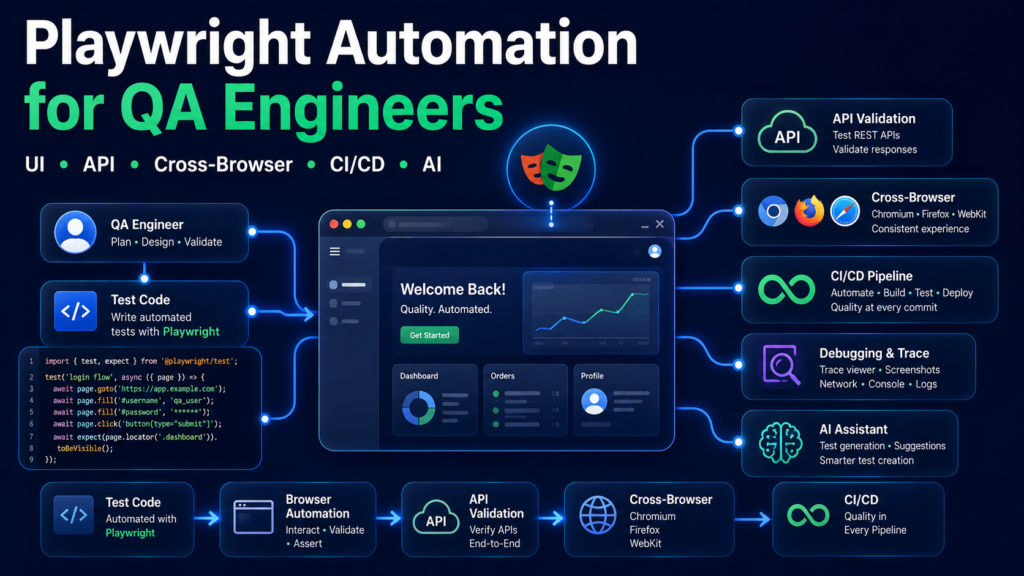
Learn Playwright automation for QA engineers: browser and API testing, language choices, setup basics, Selenium comparison, CI/CD, MCP, AI agents, and what to learn next.
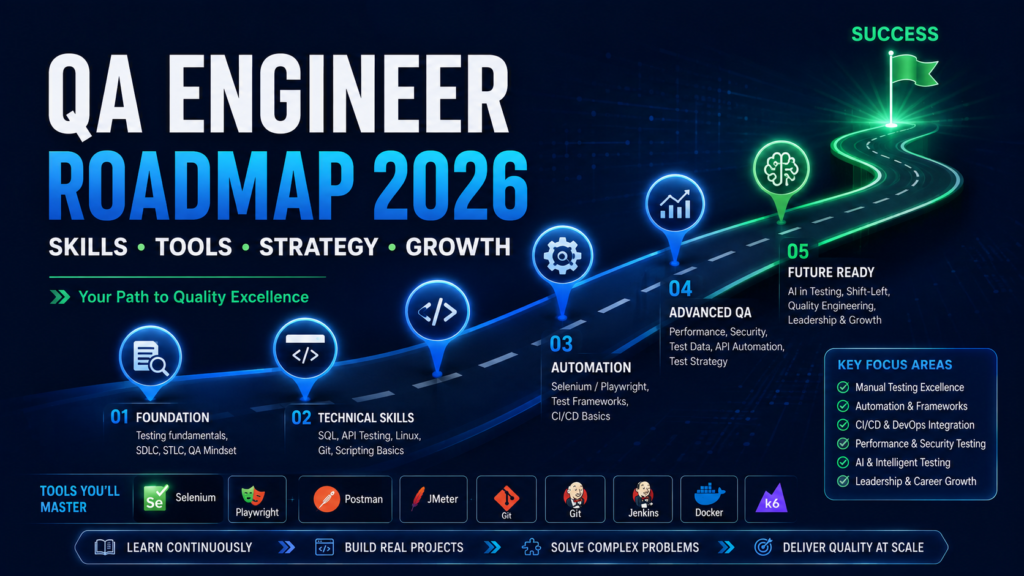
Follow a practical QA roadmap for 2026: testing fundamentals, SQL, API testing, automation, Playwright or Selenium, CI/CD, AI testing, and career growth.
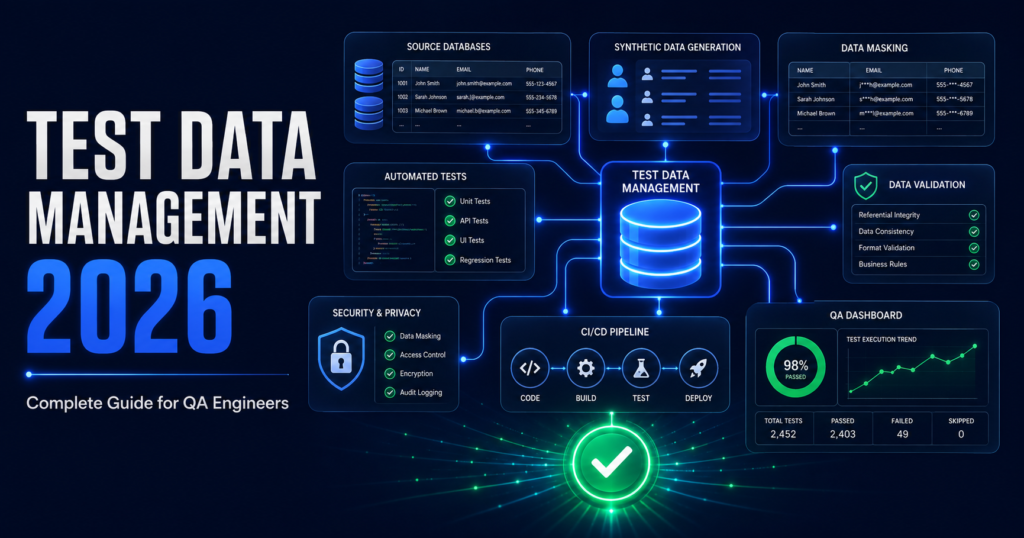
A practical guide to test data management for QA engineers, covering masking, synthetic data, deterministic testing, CI/CD integration, privacy, tools, metrics and implementation.