
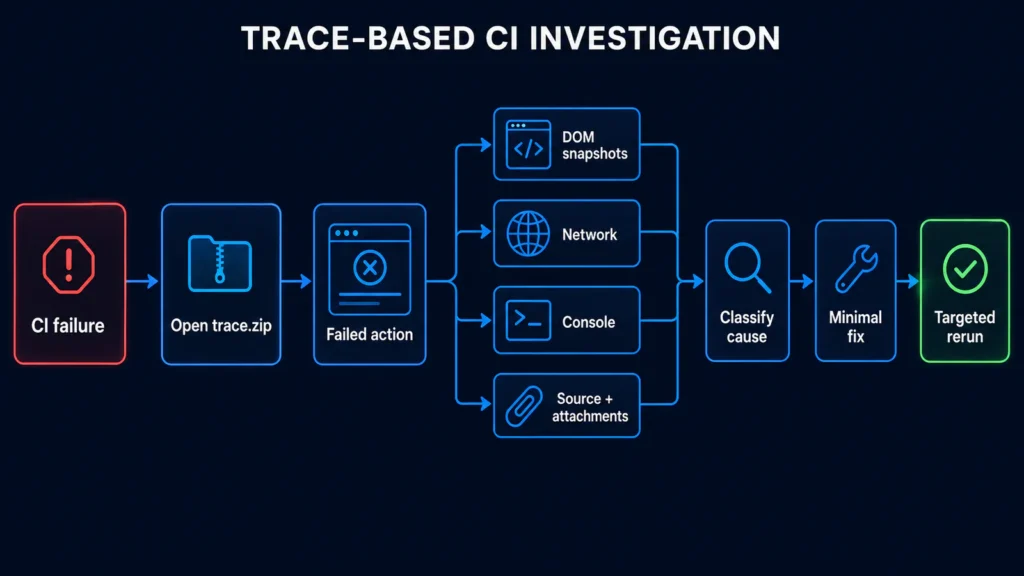
Playwright Trace Viewer: Debug Failed Tests Faster
Learn how to record and open Playwright traces, inspect DOM, network, console, source and attachments, and investigate CI failures systematically.
Learn how to record and open Playwright traces, inspect DOM, network, console, source and attachments, and investigate CI failures systematically.
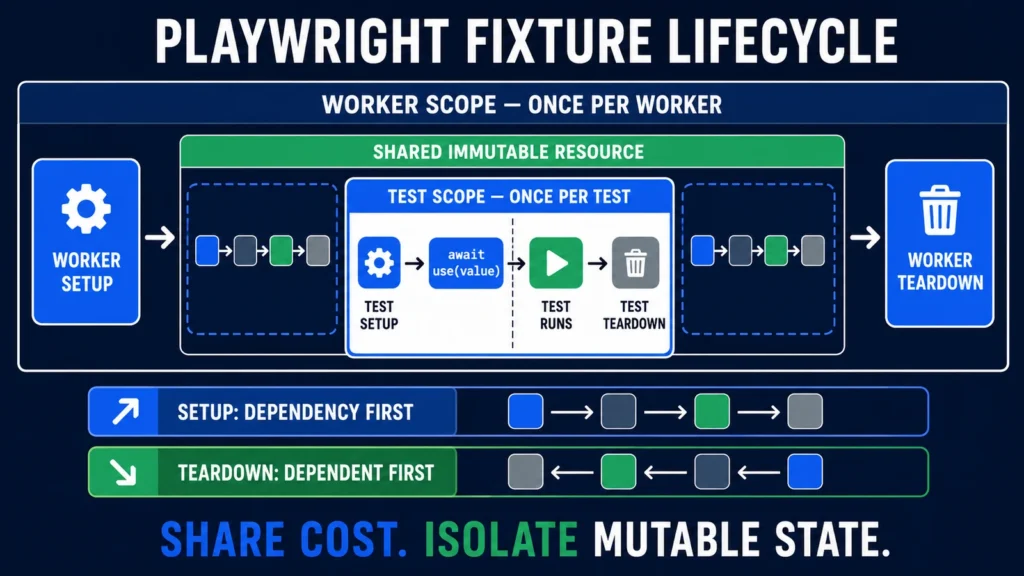
Learn Playwright fixtures with reusable setup and teardown, custom fixtures, test and worker scopes, dependencies, options, and framework patterns.
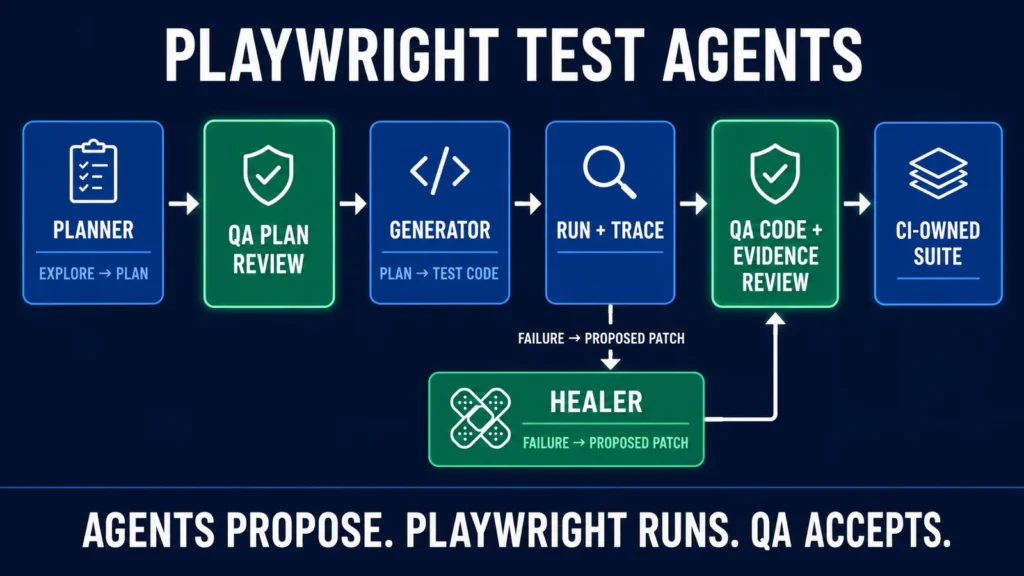
Learn how Playwright Test Agents use planner, generator, and healer workflows—and how QA teams validate AI-generated plans, tests, and fixes.
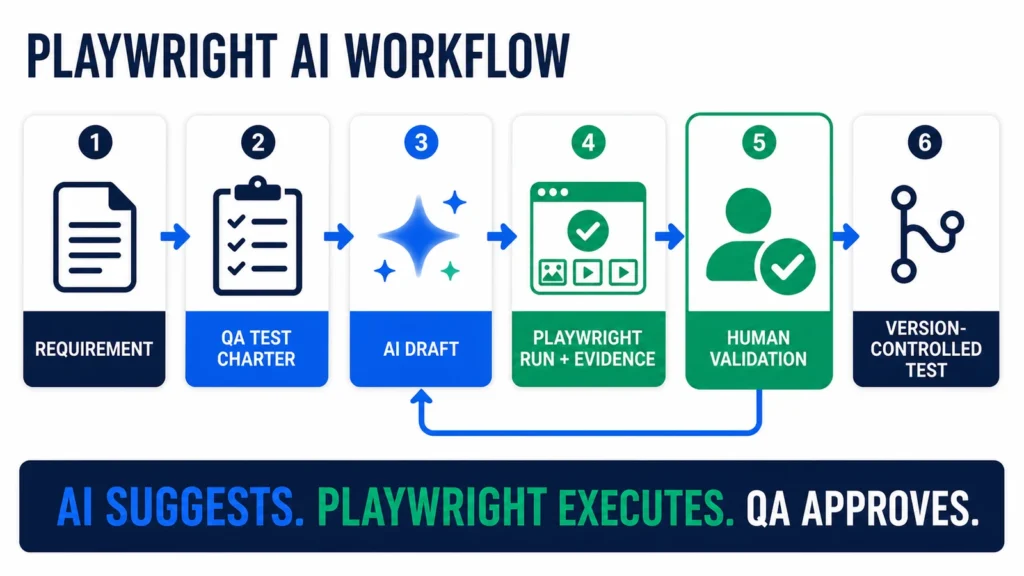
Learn how to use AI with Playwright for test design, code generation, review and debugging—plus the human checks that keep automation reliable.
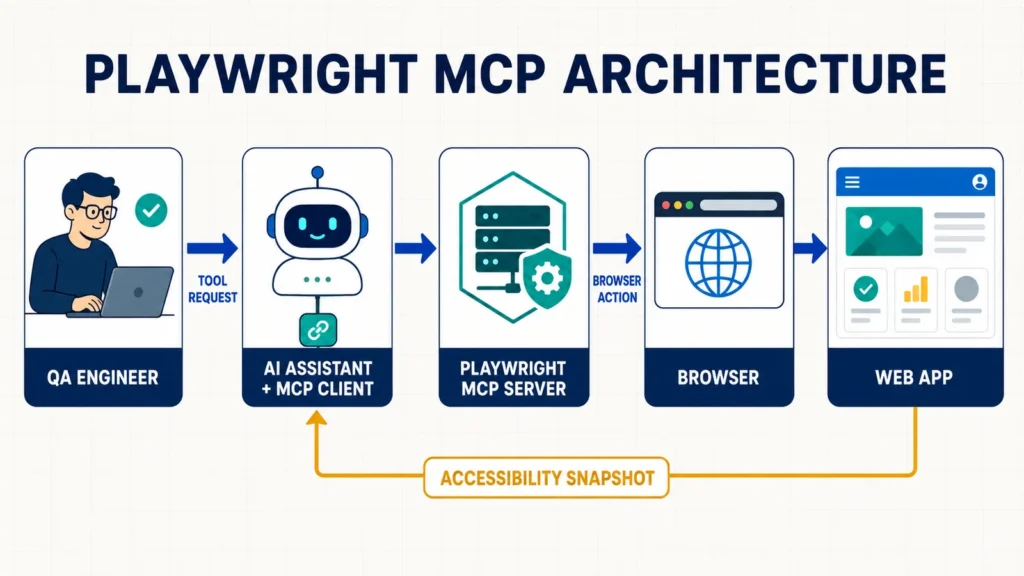
Learn how Playwright MCP connects AI agents to browsers, how to configure it, QA use cases, security controls, limitations, and how it differs from tests.
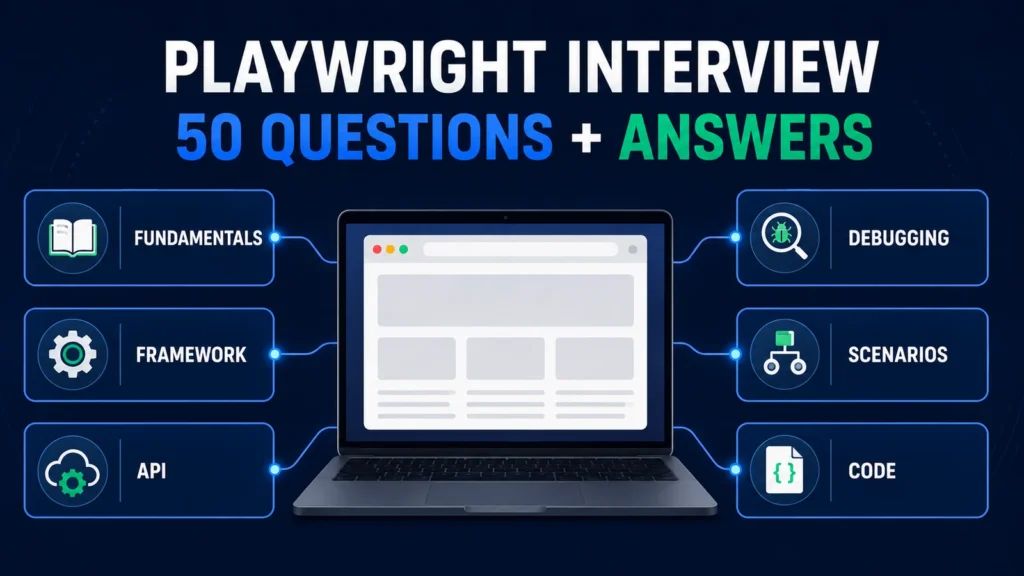
Prepare with 50 Playwright interview questions and answers covering fundamentals, locators, frameworks, APIs, debugging, scenarios, and coding.
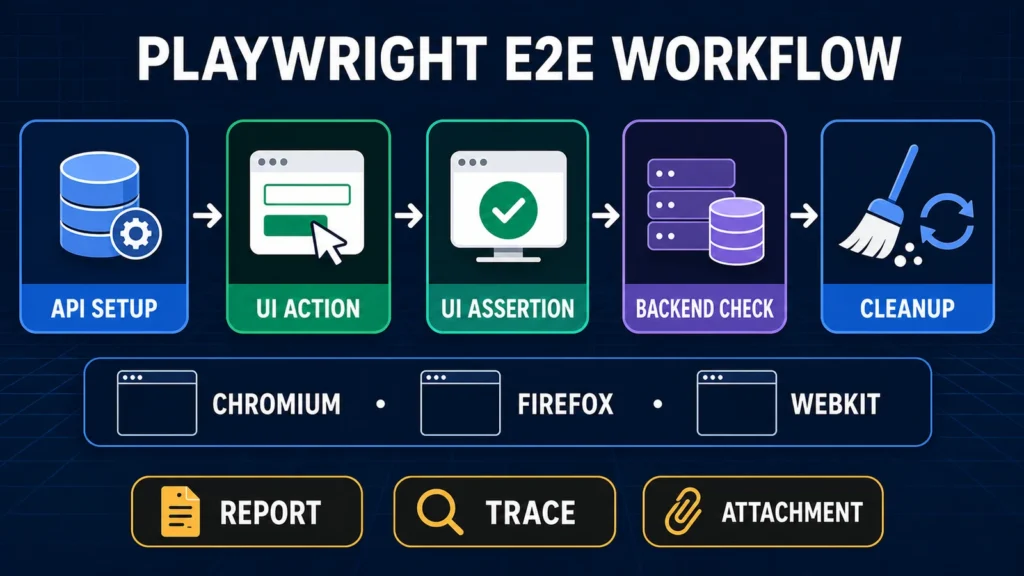
Build a real Playwright E2E workflow with API setup, UI actions, backend validation, reliable cleanup, cross-browser projects, and failure evidence.
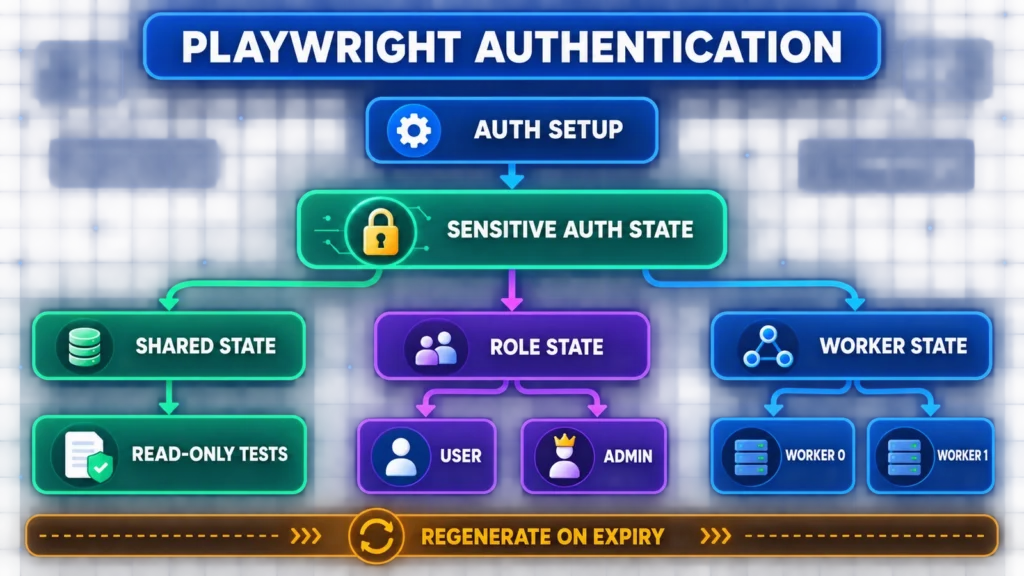
Learn secure Playwright authentication with reusable login, storage state, multiple roles, session expiry, and parallel-worker account isolation.
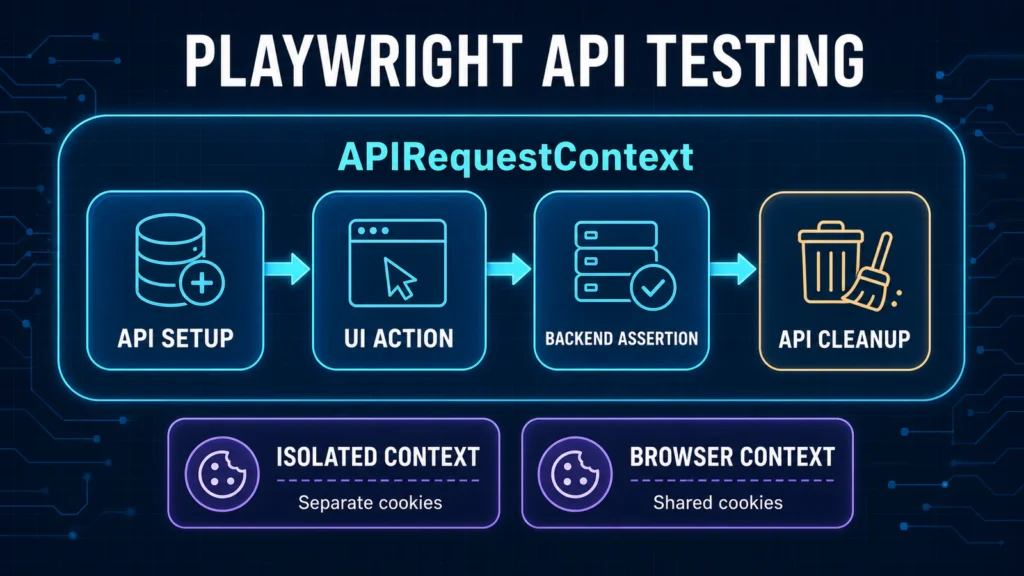
Learn Playwright API testing with APIRequestContext, authentication, assertions, setup, cleanup, backend checks, and reliable UI+API workflows.
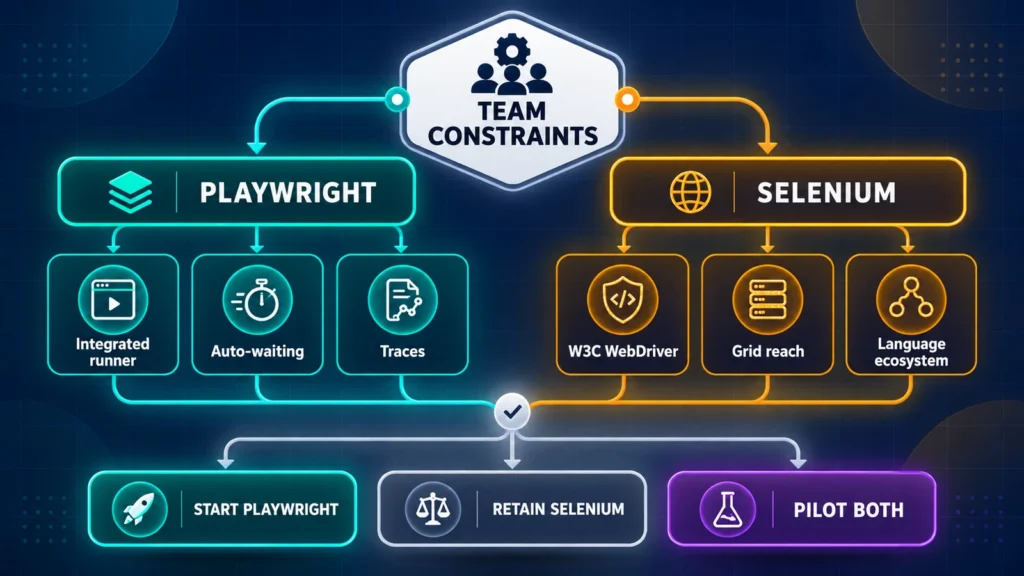
Compare Playwright and Selenium across architecture, waits, languages, browsers, tooling, maturity, migration cost, and team fit before choosing or switching.